Live auctions with KYC and AML
Bidding takes one tap, inside the live show. Identity verification only comes in above the anti-money-laundering thresholds.
Senior Product DesignerJuly – September 2026iOS and Android app
- 3 weeks
- to design and ship auctions
- 8 of 8
- auctions paid on the following weekends; on the first one it was 2 of 4
- 41 bids
- in the most contested auction of the first weeks
- 20 times
- the lead changed hands, in the same auction
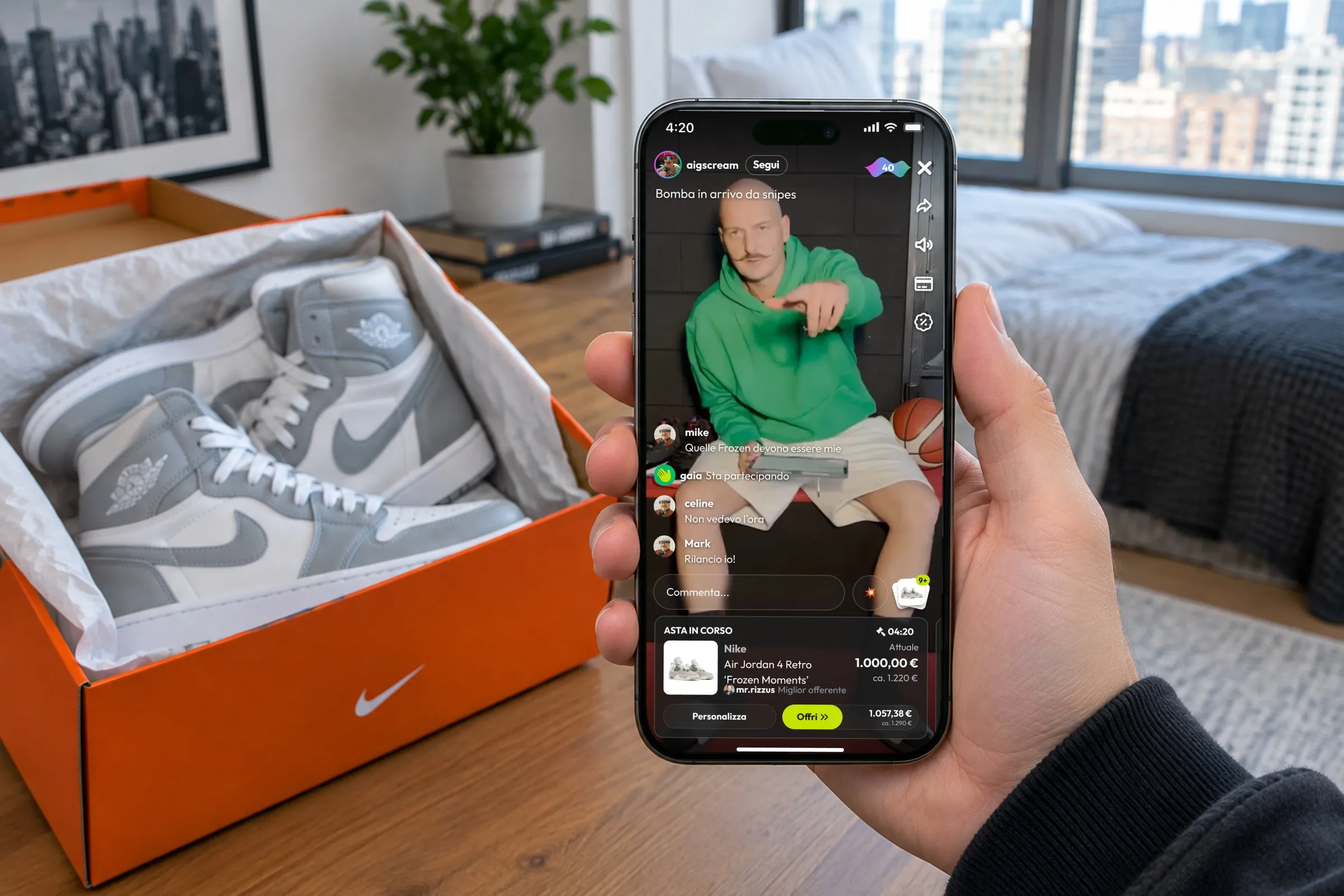
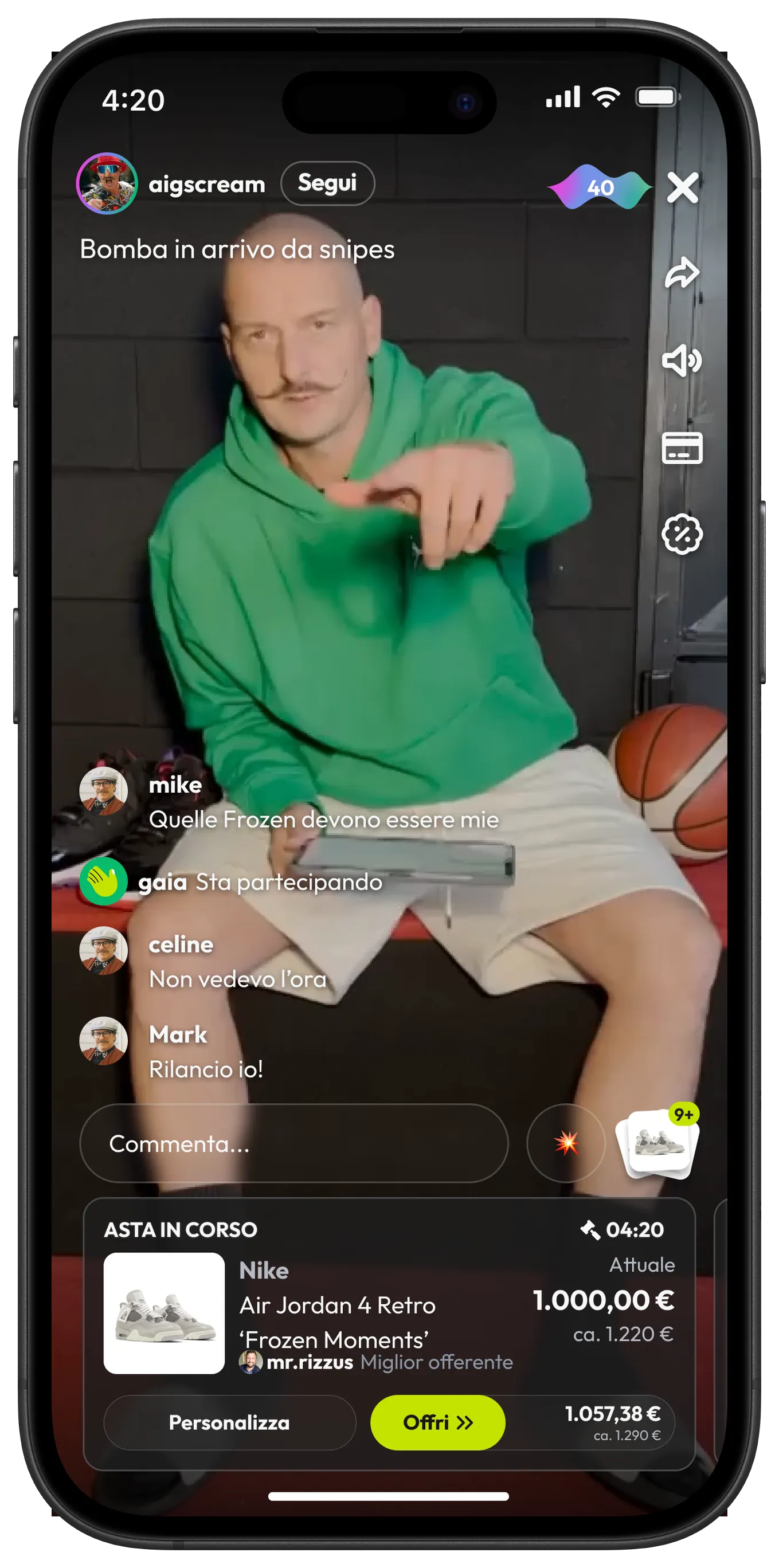
Auctions came to Bazr in two stages: first the auction inside the live show, then the identity check and the anti-money-laundering controls the law requires from anyone who wins above certain amounts. Bidders decide in a few seconds; whoever has to get verified faces documents and waiting.
Block the shipment, not the purchase.
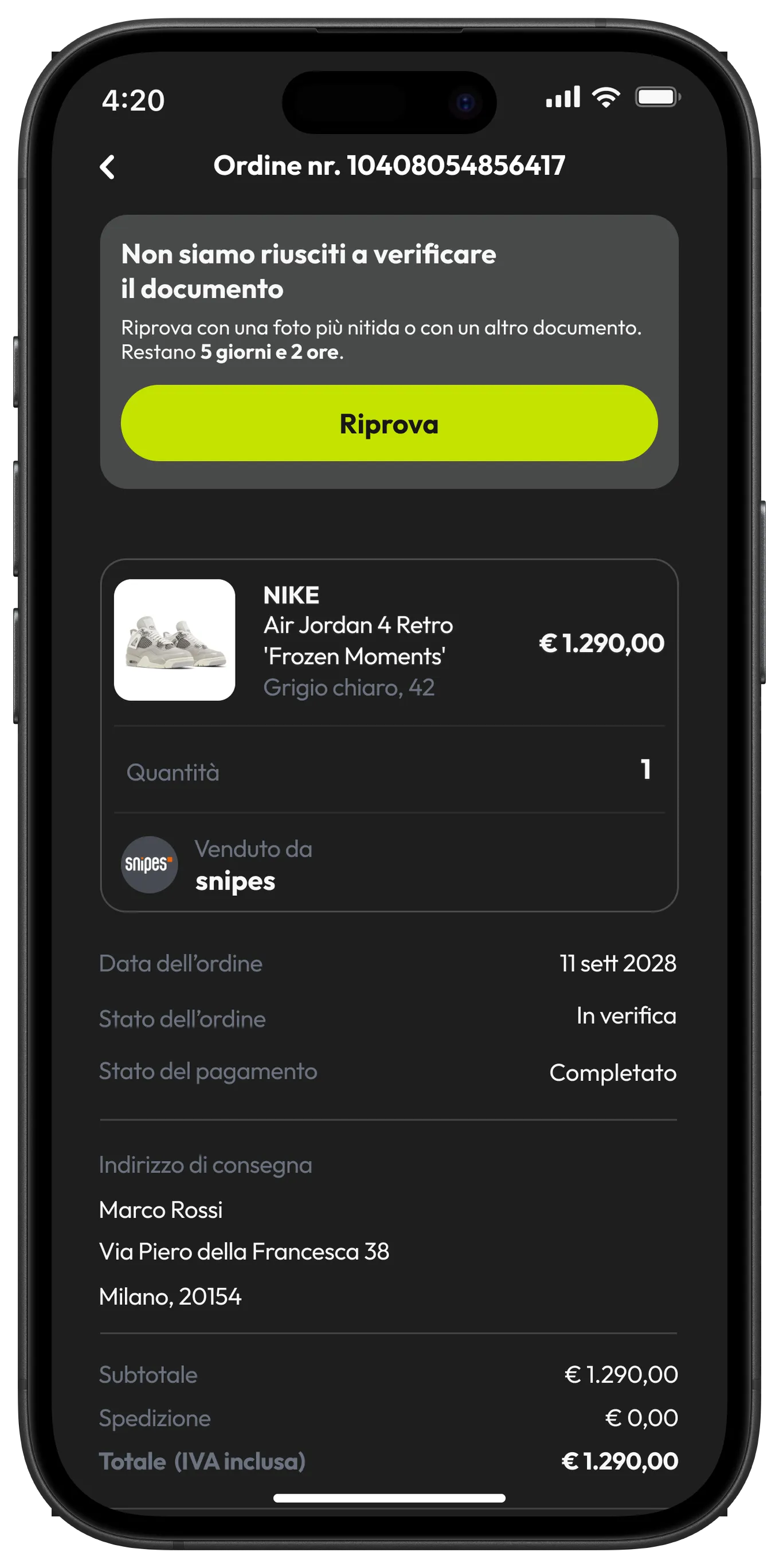
The rule that held the two together. Verification only kicks in above those amounts, and it comes after payment: the sale is already closed, and nobody else sees a thing.
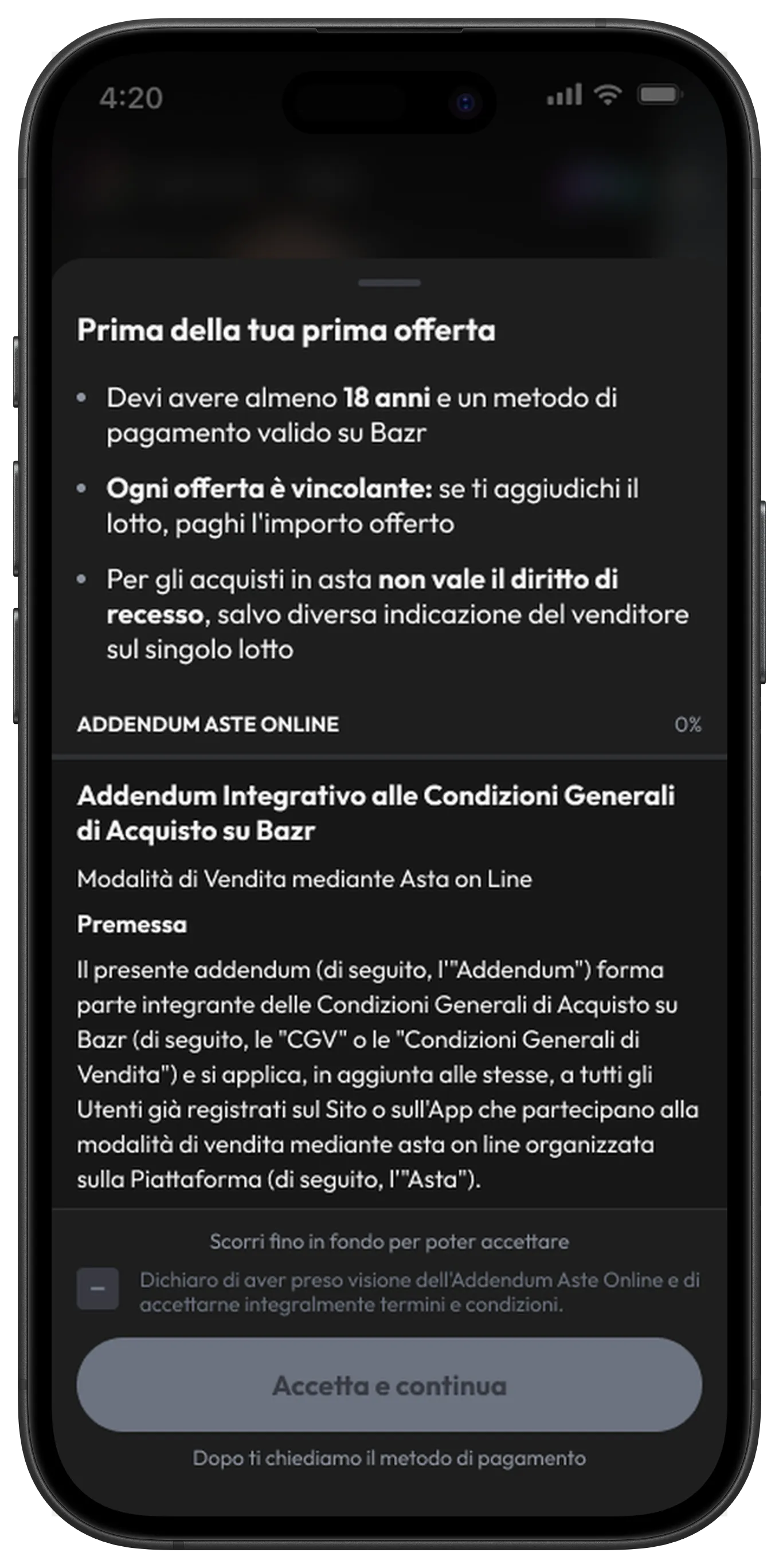
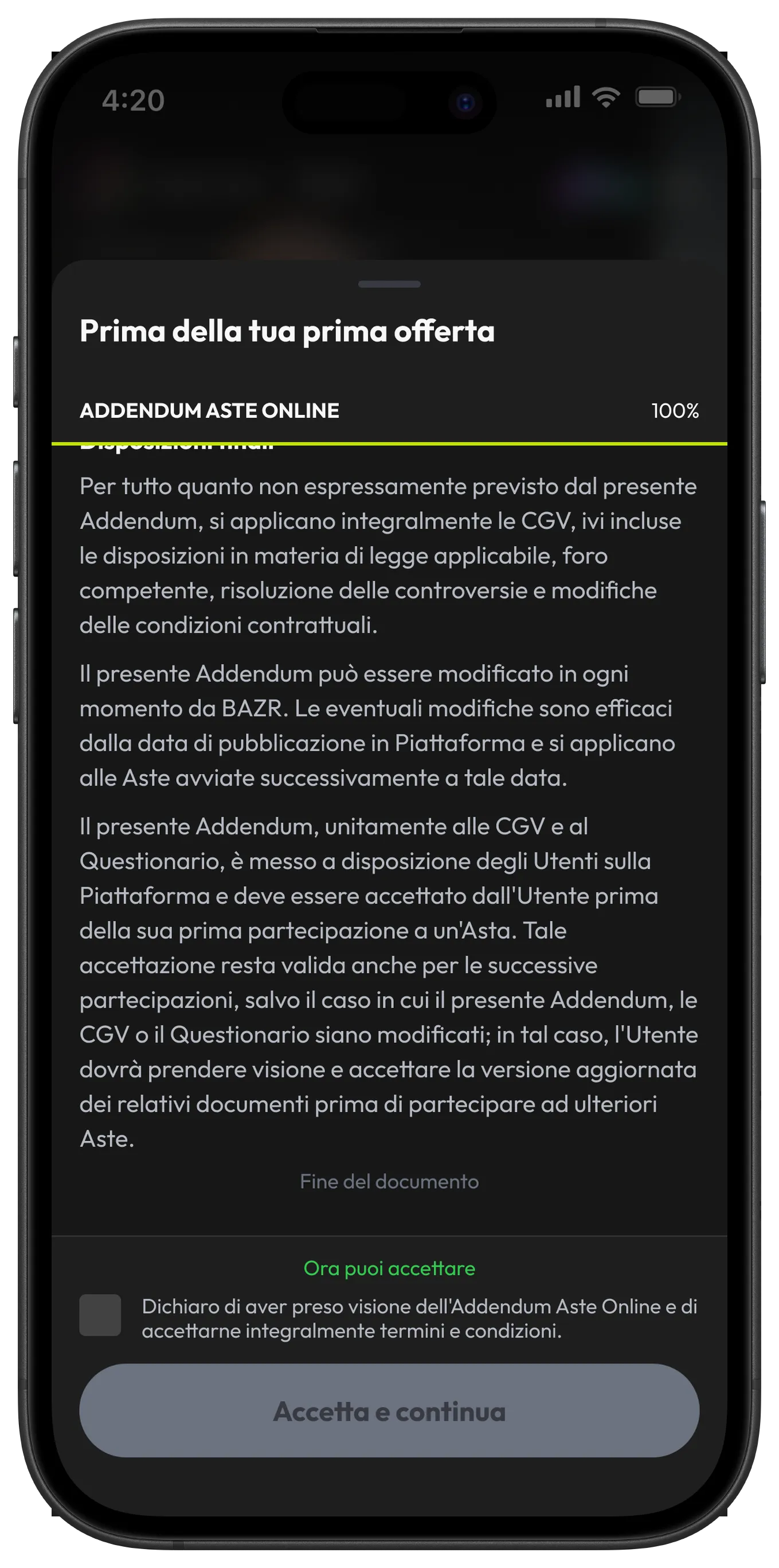
You accept the terms by reading them
The checkbox unlocks once you scroll to the end. I removed the “Document read” confirmation: scrolling doesn't prove you've read anything, and an interface shouldn't claim what it doesn't know.
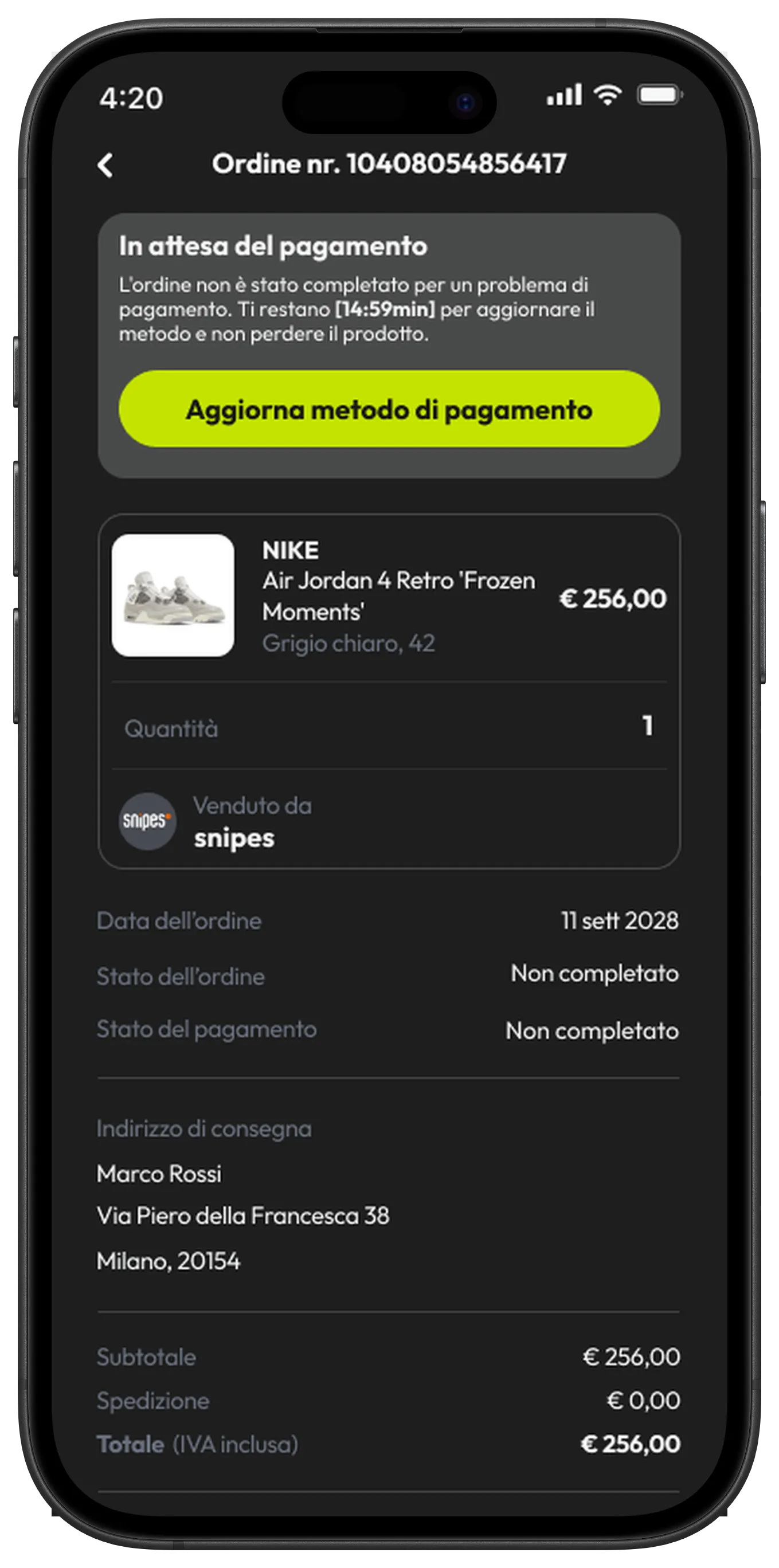
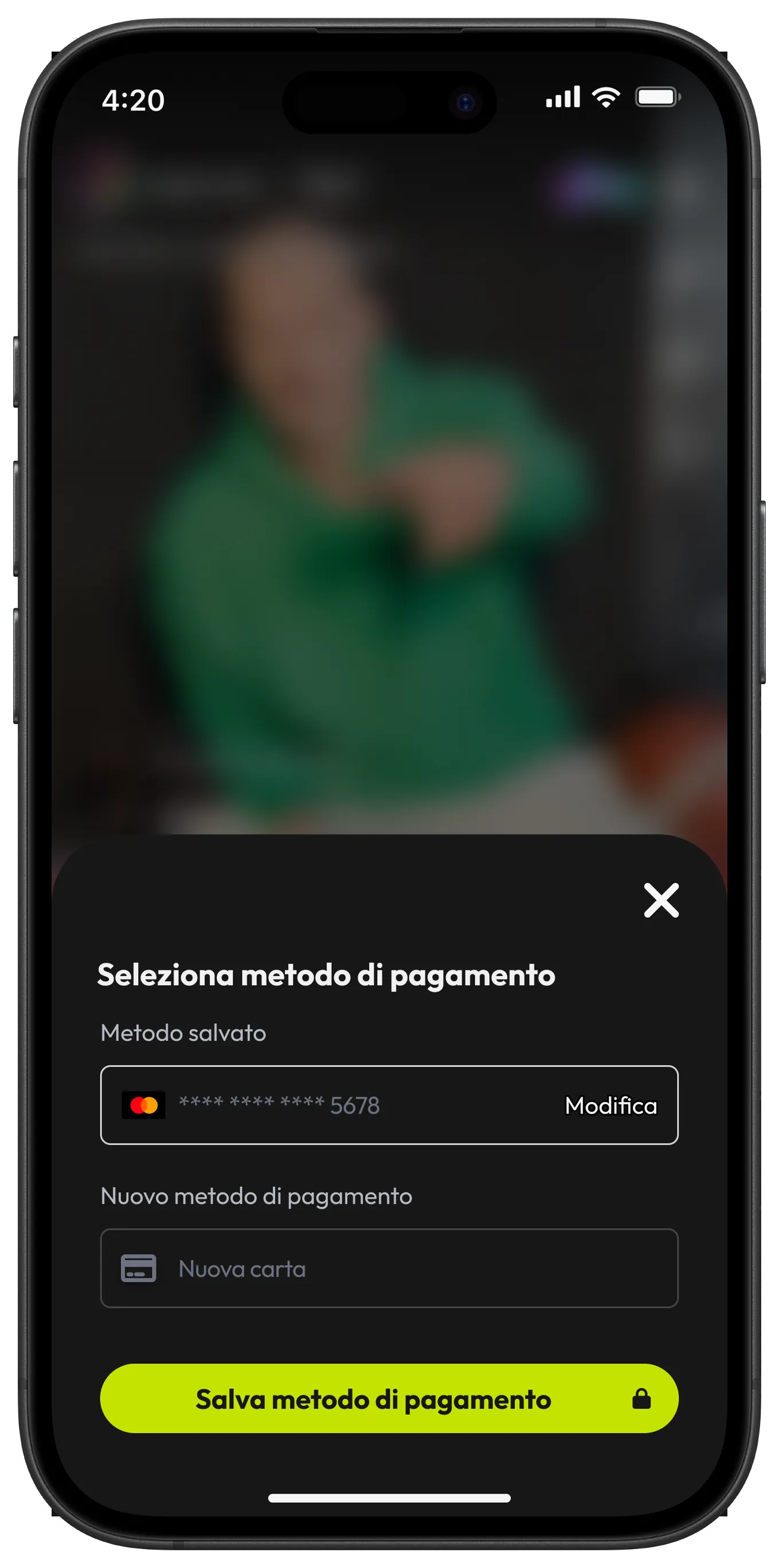
A failed payment doesn't lose you the auction
The winner has 15 minutes to retry or switch payment method from the order page, so the revenue doesn't slip away. Meanwhile the creator can already start the next auction.
Messages that accuse no one
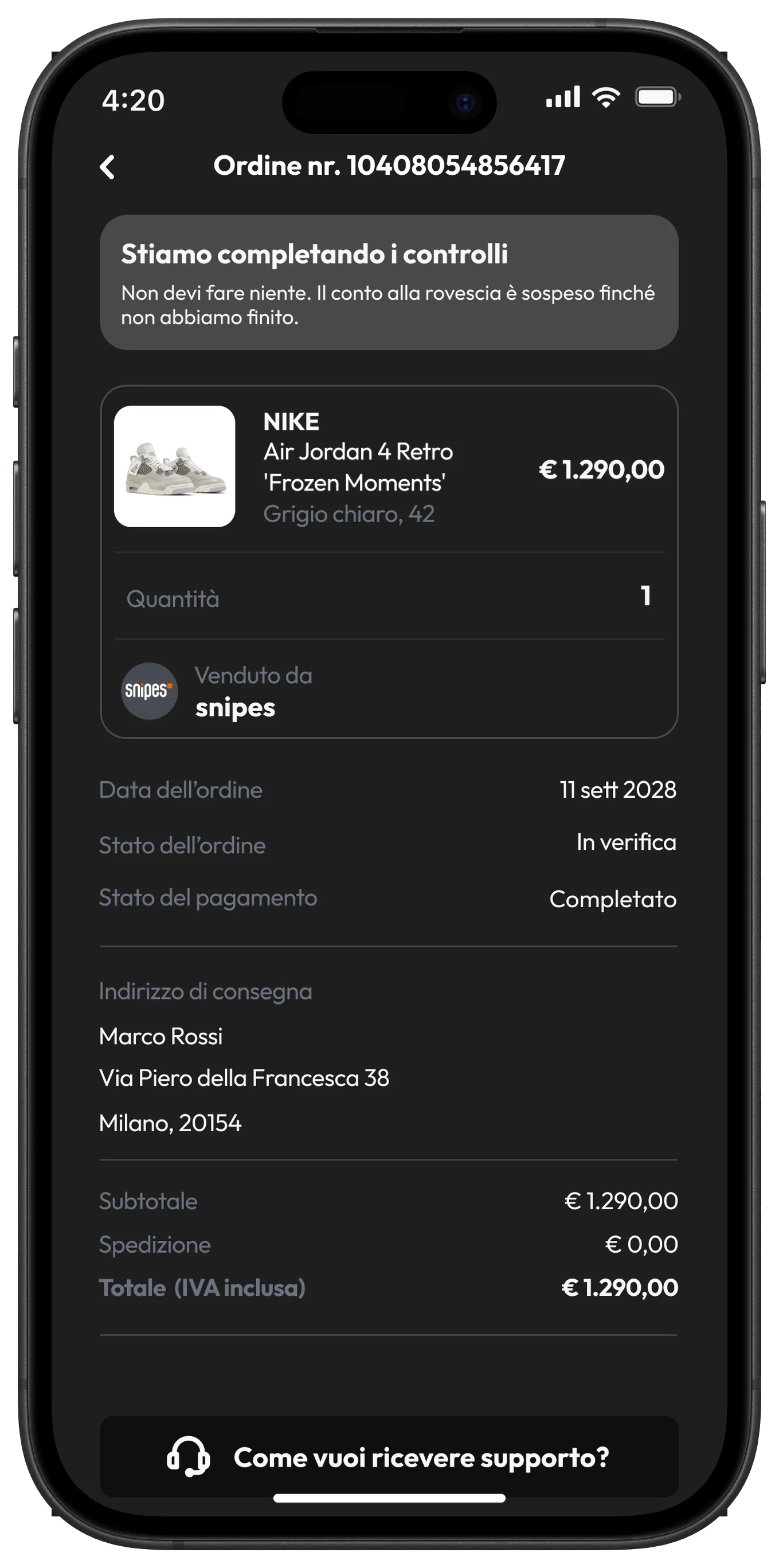
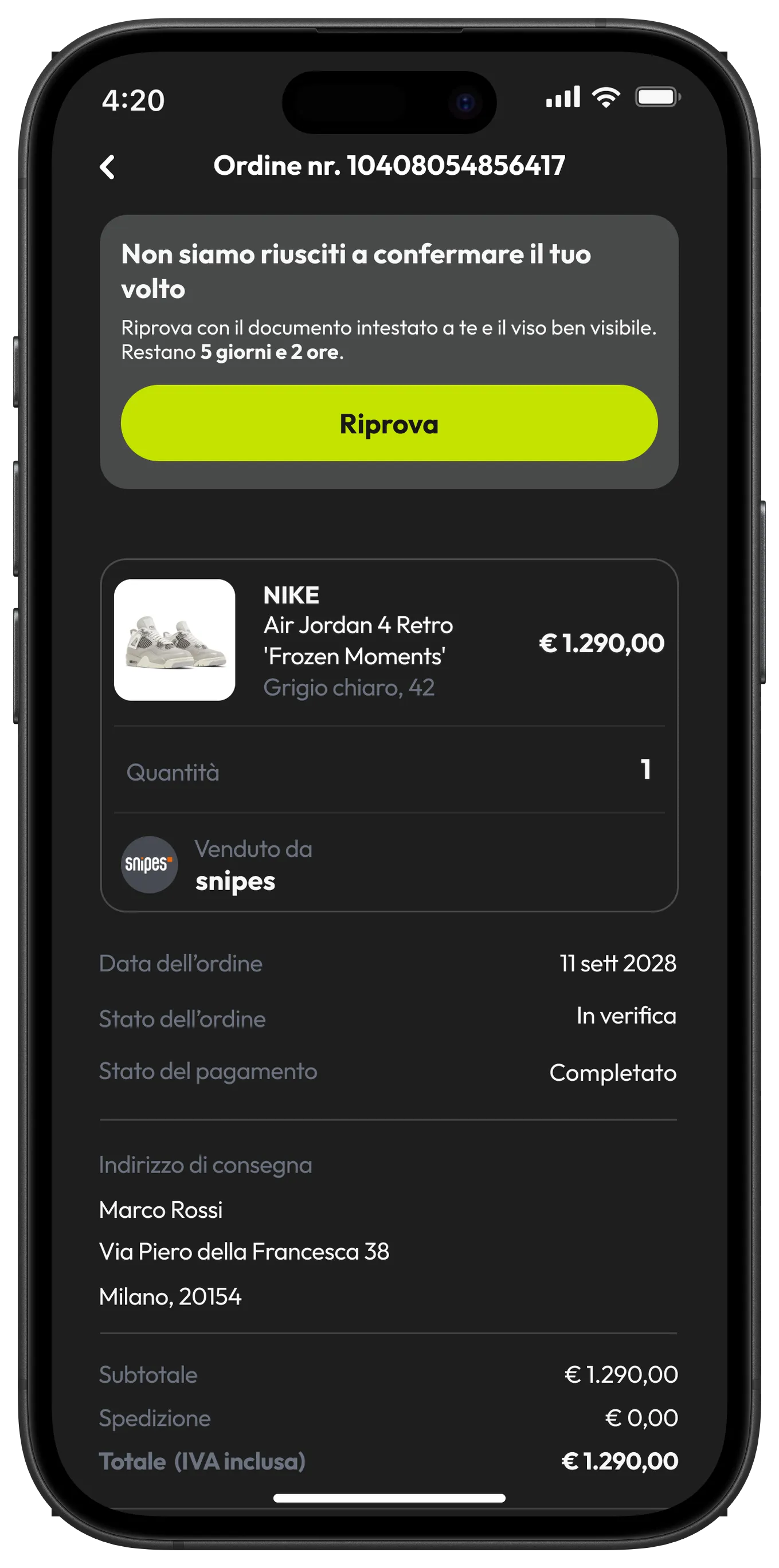
The law forbids letting anyone know they're under anti-money-laundering review, so the states look the same whatever the reason. Ten error codes from the provider become eight screens, and nobody gets accused of fraud over a bad photo.
Sellers don't pay for other people's delays
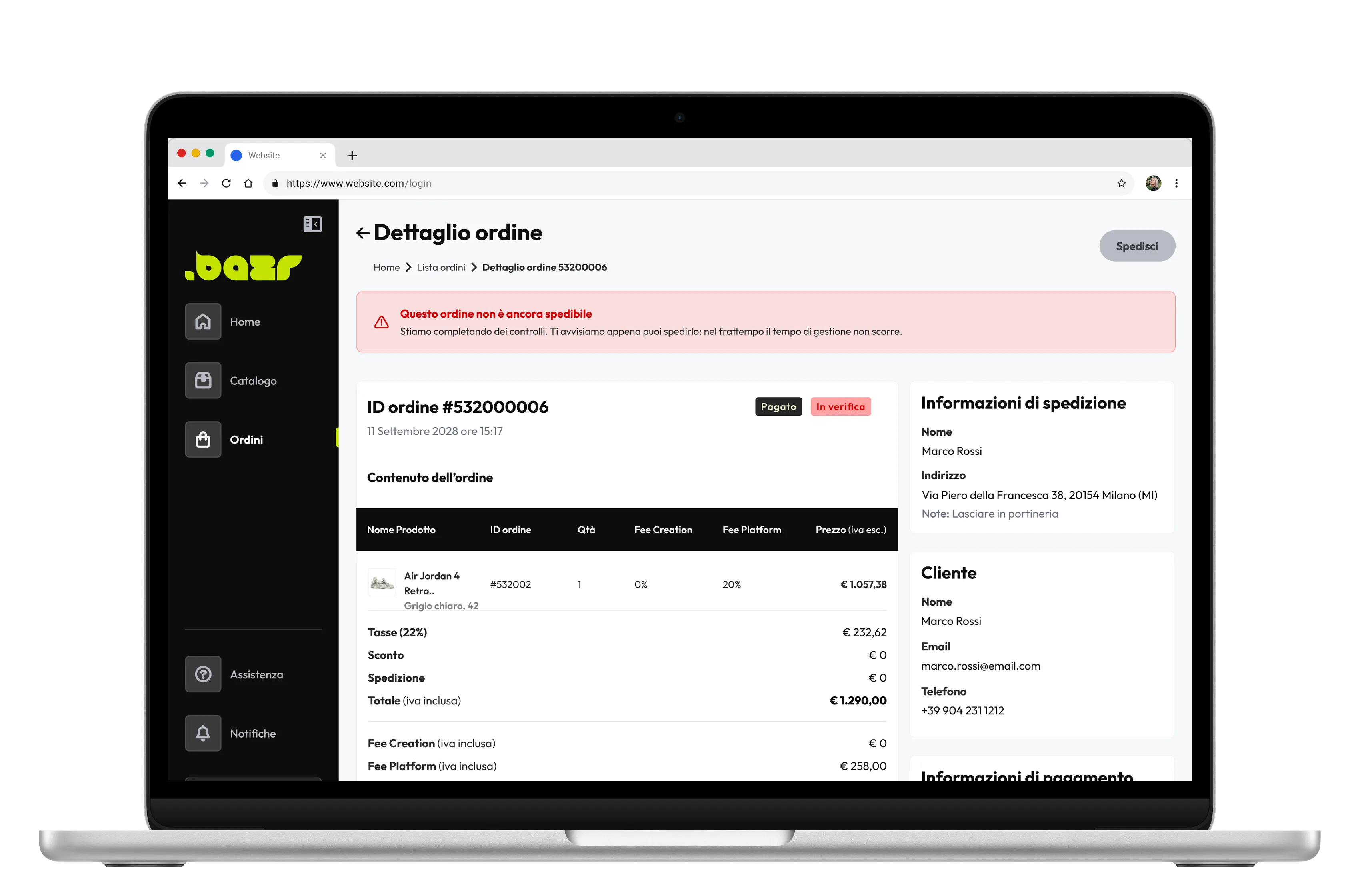
When verification is needed, the seller's shipping clock stops, so their metrics don't suffer for a delay that isn't theirs.
How it went
I delivered verification as a complete flow: besides the app screens, emails in Italian and English and a web page for anyone who opens the link outside the app.